
Workforce Pathways
Explore Eye Health Careers
Every career in eye health starts somewhere. Whether you're finishing school, changing careers, or coming back to study there's a pathway that fits your life.
Many Ways In, One Goal
Eye health is one of the most important and underserved areas of health for our communities. Aboriginal and Torres Strait Islander people experience rates of vision loss three times higher than other Australians, and 94% of that blindness is preventable.
The workforce pathways on this page show every route into eye health, from a Certificate III at TAFE to a specialist medical degree. Some paths take months, others take years. All of them matter.
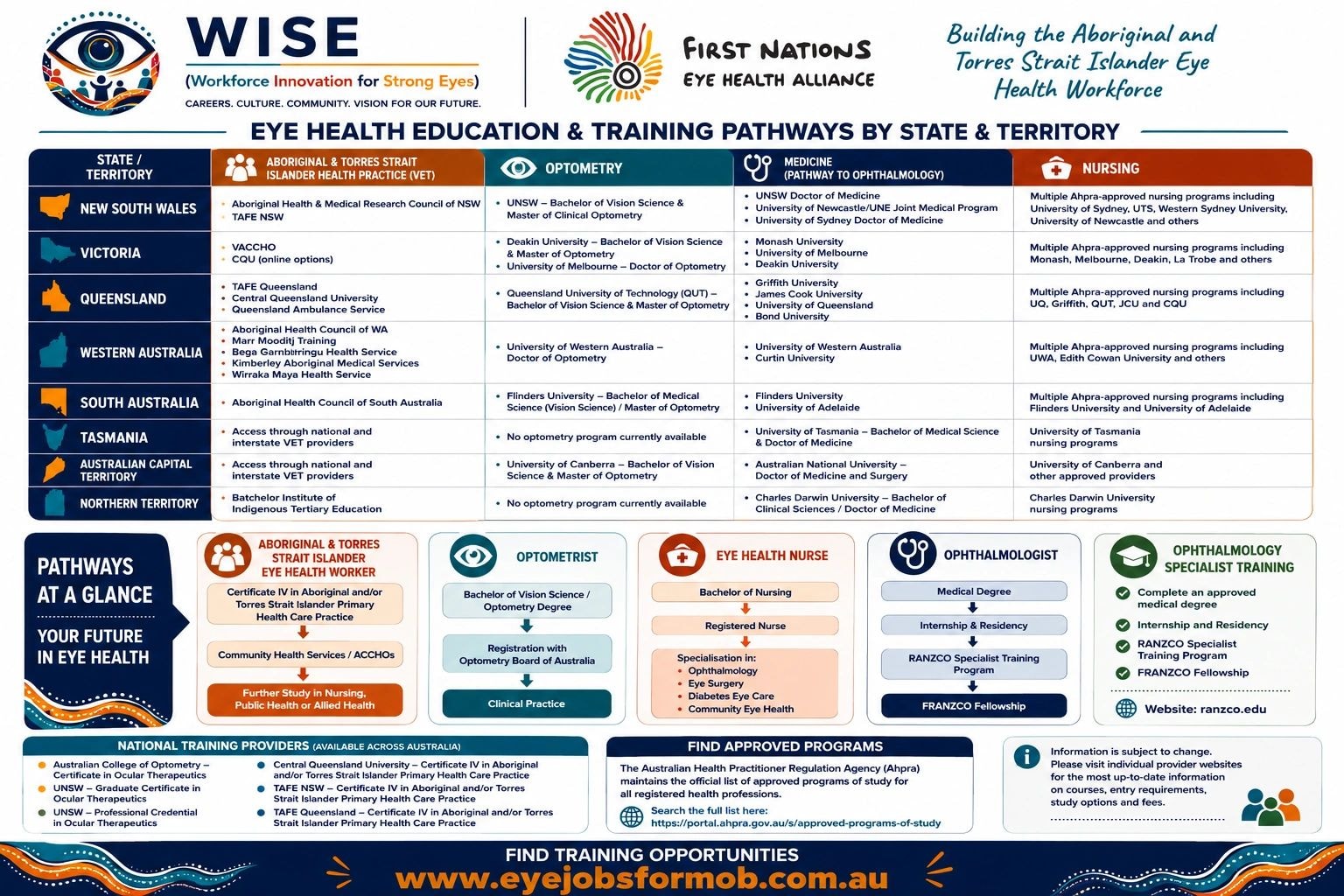
Eye Health Workforce Pathways — Australia
Two Main Pathway Types
Vocational Education & Training
Hands-on, practical training through TAFE or registered training organisations. Shorter study periods, often with on-the-job learning. Great for getting into the workforce quickly.
Careers
Many TAFE providers offer Indigenous support units, flexible study, and scholarships.
University Degree
Undergraduate and postgraduate degrees at Australian universities. Required for clinical and specialist roles. Most universities have Indigenous entry schemes and dedicated support.
Careers
Indigenous entry schemes, scholarships, rural incentives, and FNEHA mentoring available.
All Eye Health Career Pathways
Each card shows the key steps to enter that career. Click any card to read the full career guide.
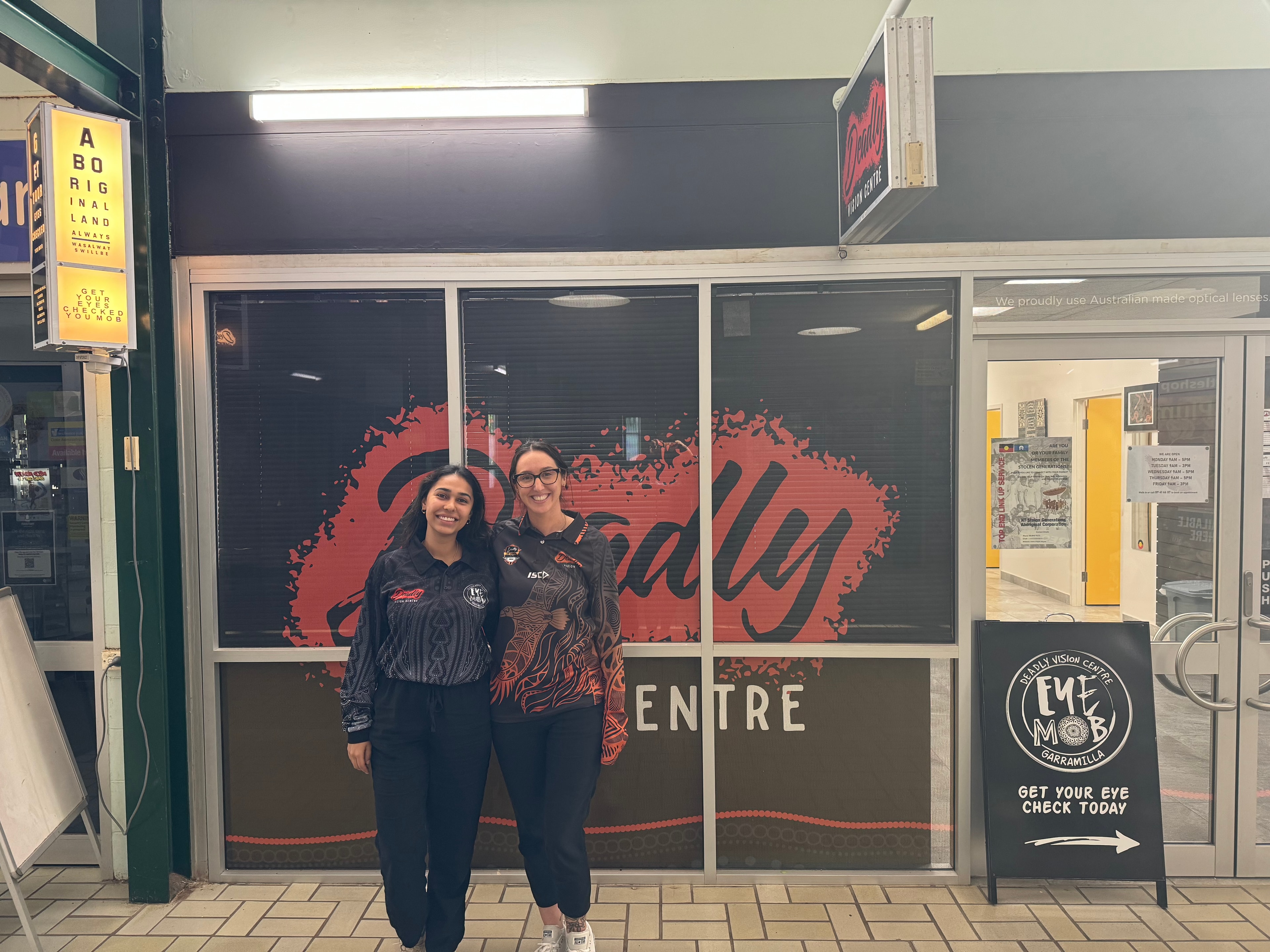
Optometrist
UniversityTest vision, prescribe glasses and contact lenses, detect and manage eye disease.
- Year 11/12 Biology & Chemistry
- Bachelor of Vision Science (3 yrs)
- Master of Optometry (2 yrs)
- Ahpra Registration
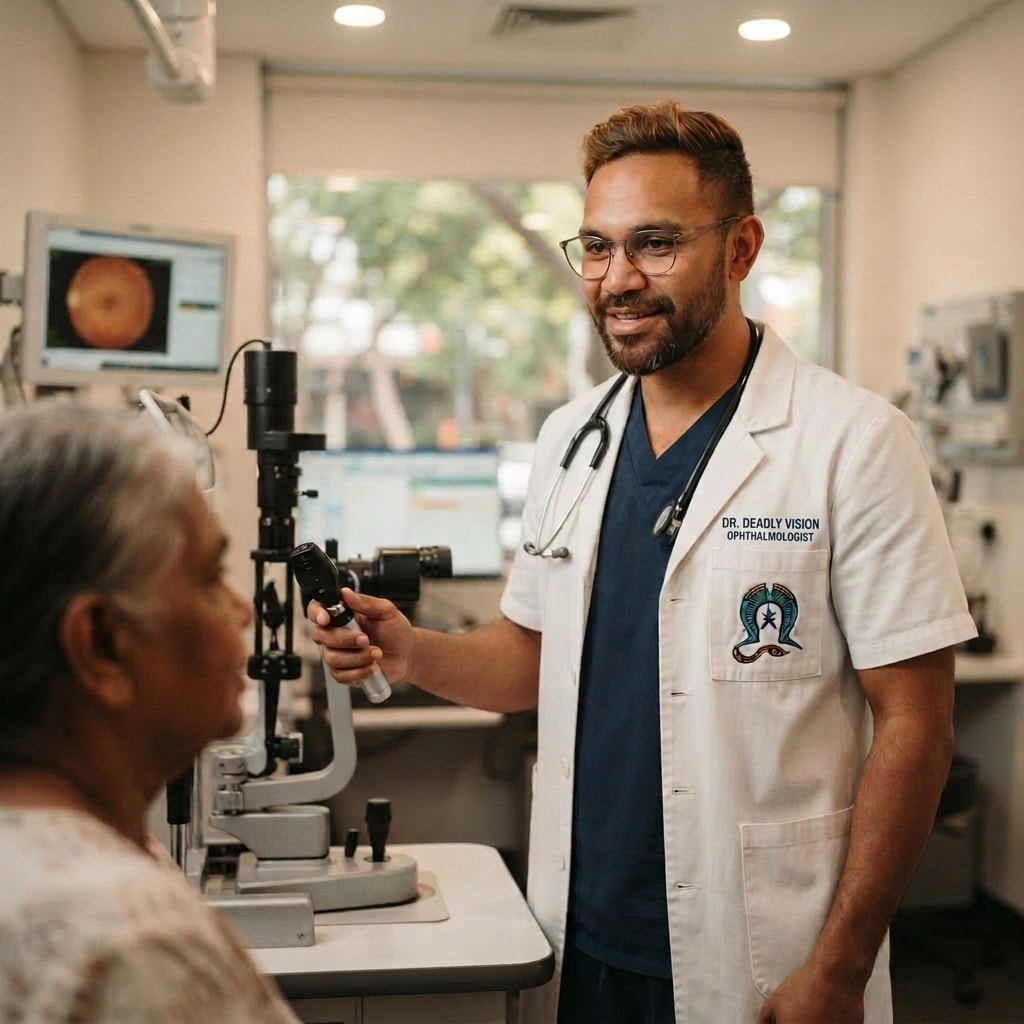
Ophthalmologist
UniversityMedical doctors who specialise in eye surgery and complex eye disease.
- Year 11/12 Sciences
- MBBS (5–6 yrs)
- Internship & Residency (2 yrs)
- Ophthalmology Training (5 yrs)
- FRANZCO Fellowship
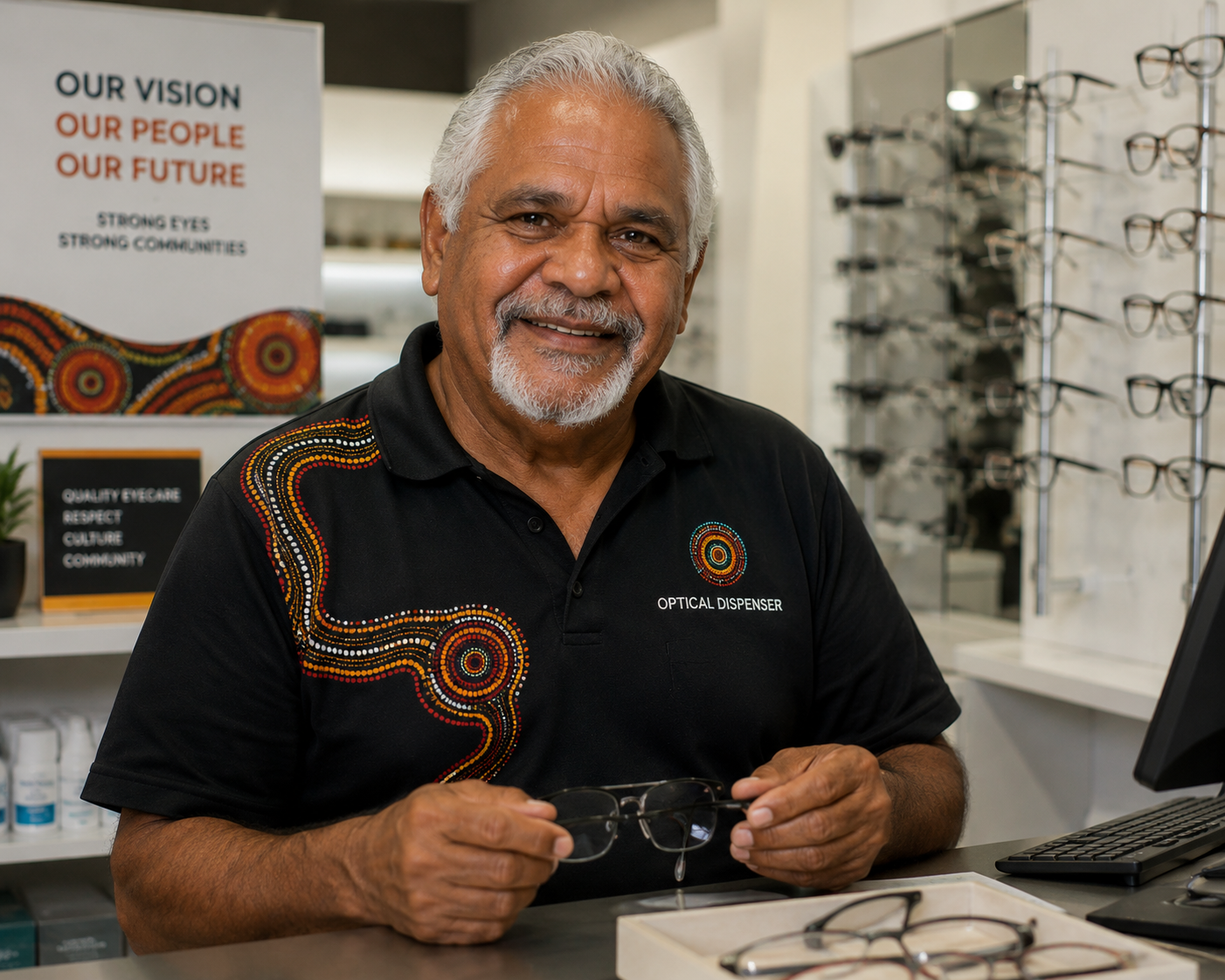
Optical Dispenser
VETHelp people choose and fit glasses and contact lenses. Work in optical stores and clinics.
- Year 10 completion (or equivalent)
- Certificate IV in Optical Dispensing (1–2 yrs)
- ACBO Registration
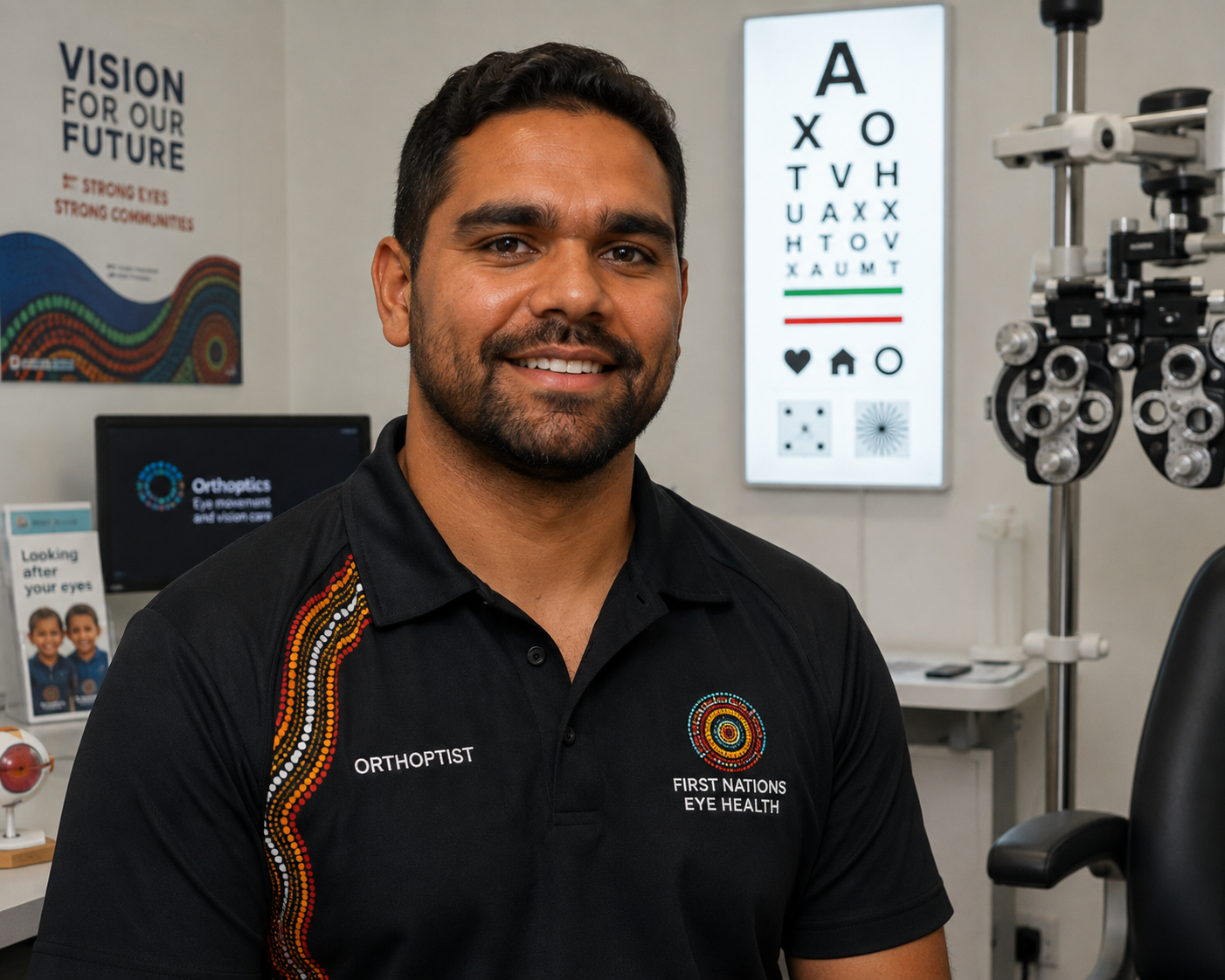
Orthoptist
UniversityAssess and treat eye movement disorders, lazy eye, and visual impairment.
- Year 11/12 Biology & Health
- Bachelor of Orthoptics (3 yrs)
- Orthoptics Australia Membership
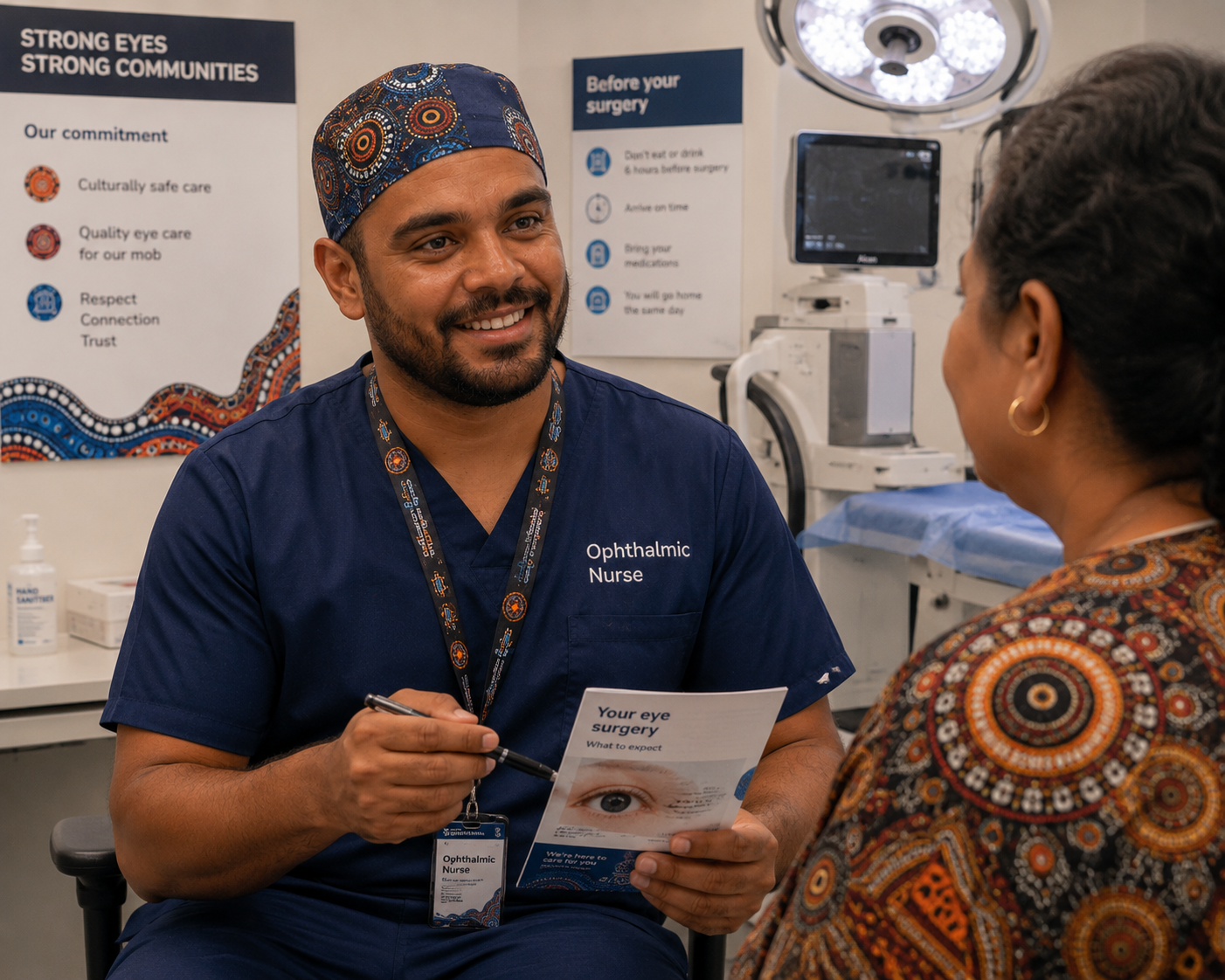
Ophthalmic Nurse
UniversityRegistered nurses who specialise in eye care, supporting surgeons and optometrists.
- Year 11/12 Biology
- Bachelor of Nursing (3 yrs)
- Ahpra Registration
- Ophthalmic Nursing Specialisation
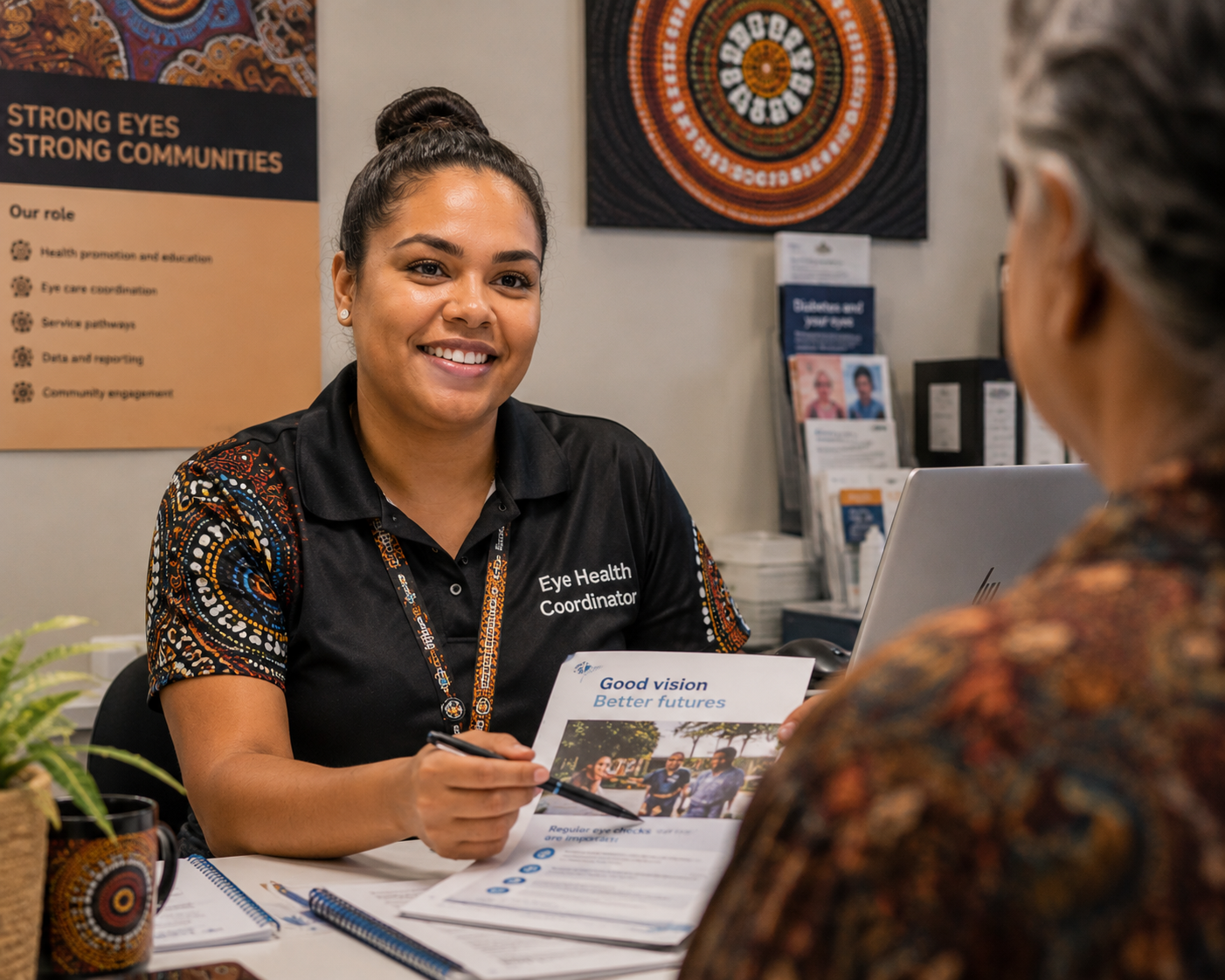
Eye Health Coordinator
VETCoordinate eye health services in community settings. Often the first point of contact for patients.
- Year 10 (or life experience)
- Certificate III in Health Services (6–12 months)
- On-the-job training

Vision Researcher
UniversityConduct research into eye disease, treatments, and Indigenous eye health outcomes.
- Year 11/12 Sciences & Maths
- Bachelor's Degree (3 yrs)
- Honours Year
- PhD (3–4 yrs)
- Postdoctoral Research
Support for First Nations Students
Indigenous Entry Schemes
Most universities have dedicated entry pathways for Aboriginal and Torres Strait Islander students, including alternative entry requirements and bridging programs.
Scholarships & Bursaries
Federal and state government scholarships, university-specific bursaries, and health workforce incentives are available for First Nations students in health fields.
FNEHA Mentoring
The First Nations Eye Health Alliance connects students with mentors already working in eye health, mob supporting mob through study and into the workforce.
Rural & Remote Incentives
Students from rural and remote communities may be eligible for additional financial support, relocation assistance, and rural health placement incentives.
Not Sure Where to Start?
The Where to Begin guide walks you through each pathway step by step, based on where you are right now.