Eye Health Careers
Ophthalmic Nursing
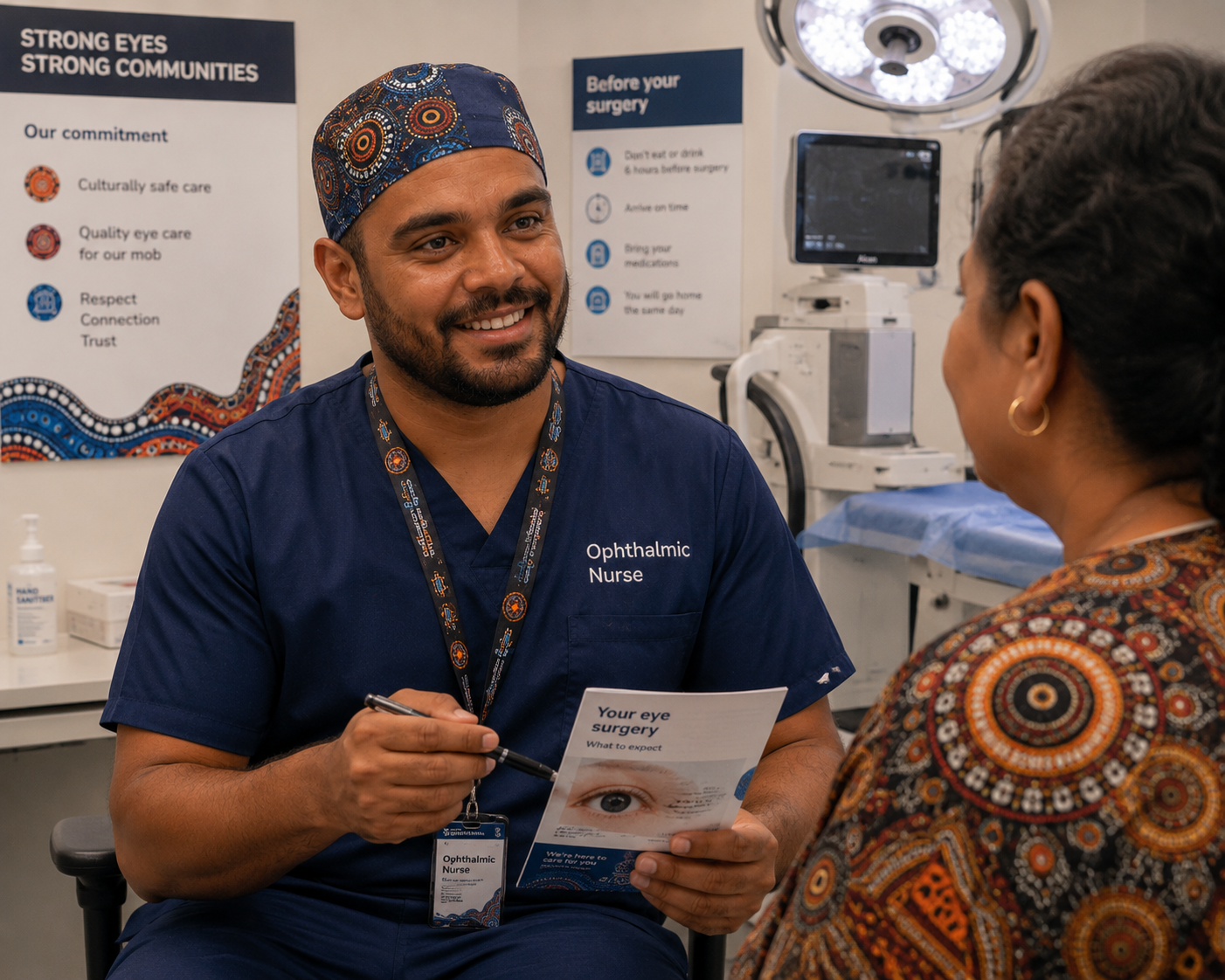
Ophthalmic nursing is a clinical specialty within nursing focused on the care of patients with eye diseases, visual impairments, and conditions requiring ophthalmologic procedures.
Practitioners support ophthalmologists in medical and surgical care while providing patient education, pre- and postoperative management, and visual rehabilitation.
Scope and roles
Ophthalmic nurses manage the continuum of eye care, from routine assessments and diagnostic testing to assisting in surgeries such as cataract removal or corneal transplants. They prepare patients for ophthalmic procedures, administer ocular medications, and monitor recovery. In community settings, they help detect early signs of eye disease and promote visual health education.
What does an Ophthalmic Nurse do?
Ophthalmic nurses support eye doctors and surgical teams. They:
- Prepare patients for eye surgery
- Assist during ophthalmic procedures
- Provide post-operative care
- Administer eye medications and treatments
- Educate patients about recovery and eye health
- Perform eye assessments in clinical settings
Where do Ophthalmic Nurses work?
- Public and private hospitals
- Day surgery centres
- Ophthalmology clinics
- Community eye health programs
Skills needed for ophthalmic nursing
Education and Training Pathway
Bachelor of Nursing (3 years)
Registration with Ahpra (Nursing and Midwifery Board)
Postgraduate certificate or experience in ophthalmic nursing (optional but beneficial)
On-the-job training in eye units
Career opportunities and progression
Job outlook and lifestyle
- Strong demand in hospitals and surgery centres
- Shift work including nights in hospital settings
- Stable employment and good job security
- Emotionally rewarding but sometimes fast-paced
Is ophthalmic nursing a good career for you?
A good fit if you:
- Want a nursing career with a specialty focus
- Like surgical and hospital environments
- Are comfortable with shift work and patient care
Career journeys in eye health
Aunty Janet Richardson
From nursing to a lifetime in Aboriginal eye health
A career that began in nursing
Aunty Janet Richardson is of Baard and Yawuru Culture, an Ooranyg / Ngala Jandu (Saltwater Woman) Heritage from Broome in the Dampier Peninsula of the West Kimberley Region.
Her career in health began after leaving school, when she trained as an Enrolled Nurse and worked in Derby for many years.
In 1978, when the Broome Regional Aboriginal Medical Service was established, Aunty Janet worked as a Nurse/Receptionist. It was there that she met Professor Fred Hollows and his team and travelled with them through the Peninsula Region of the Kimberleys and outstations at Roebuck Plains.
That experience helped inspire Aunty Janet to pursue a career in eye health.
Over the decades that followed, her work expanded far beyond nursing. She completed a Certificate IV in Indigenous Eye Health and has worked to improve access to culturally safe eye care and minimise unnecessary vision loss for Aboriginal and Torres Strait Islander people.
Aunty Janet has also supported patients, specialists and health services through cultural liaison, language support, cultural education and research.
Her journey shows that nursing can be the beginning of a long and meaningful career in eye health — one that can grow into leadership, advocacy, cultural guidance and improving care for community.
Working with Indigenous patients in eye health to minimise unnecessary vision loss.
Career journey
- 1
Enrolled Nurse
- 2
Aboriginal Medical Service
- 3
Indigenous Eye Health
- 4
Cultural & Patient Support
- 5
Eye Health Leadership
- 1
Enrolled Nurse
- 2
Aboriginal Medical Service
- 3
Indigenous Eye Health
- 4
Cultural & Patient Support
- 5
Eye Health Leadership
Seeing Our Way: Life & Legacy
Watch Aunty Janet's Life & Legacy story
Hear Aunty Janet share her journey, experiences and reflections on a lifetime working in Aboriginal eye health.
Seeing Our Way: Life & Legacy — First Nations Eye Health Alliance
Learn more about Seeing Our Way: Life & LegacyDownload the Infographic
Save this workforce pathways infographic as a PDF to share or reference offline.
Ophthalmic Nurses Workforce Pathways Infographic (PDF)