Eye Health Career
Orthoptist
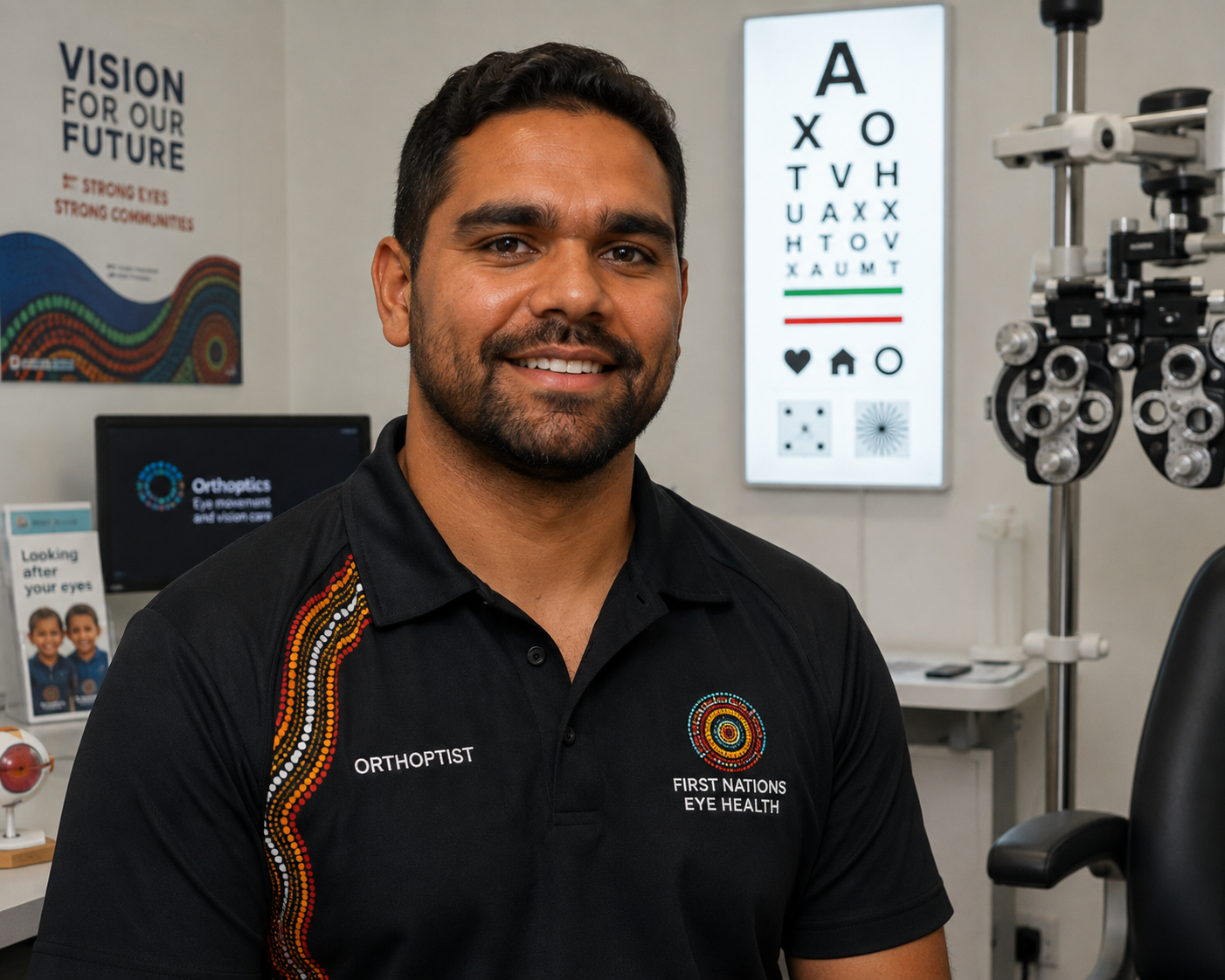
Orthoptists are allied health professionals who specialise in diagnosing and treating disorders of eye movement and binocular vision.
Orthoptists play a vital but often overlooked role in eye health. They assess and treat conditions like lazy eye (amblyopia), crossed eyes (strabismus), and double vision — working with patients of all ages from newborns to the elderly. In First Nations communities, orthoptists are increasingly important in managing diabetic eye disease and supporting patients through surgical care.
Scope of Practice
Orthoptists work within a multidisciplinary team alongside ophthalmologists, optometrists, and other health professionals. They conduct specialised diagnostic tests, develop treatment plans, and provide vision rehabilitation — all within their defined scope of practice as registered allied health professionals.
What Orthoptists Do
Orthoptists assess, diagnose, and treat a range of eye movement and binocular vision conditions.
- Assess and treat amblyopia (lazy eye) and strabismus (crossed eyes)
- Conduct specialised visual field and electrophysiology testing
- Manage diabetic retinopathy screening programs
- Provide vision rehabilitation for patients with low vision
- Assist ophthalmologists in clinics and surgical settings
- Conduct paediatric vision assessments
Where They Work
- Public and private hospital ophthalmology departments
- Community health centres and ACCHOs
- Paediatric hospitals and child health services
- Remote and outreach eye health programs
- Research and academic institutions
Skills & Qualities
Education Pathway
Complete Year 12 with science subjects
Bachelor of Orthoptics (3–4 years)
Complete clinical placements in hospitals and community settings
Register with Orthoptics Australia
Career Roles
Career Outlook
- Growing demand in hospital and community settings
- Critical role in diabetic eye disease programs affecting First Nations communities
- Opportunities in telehealth and remote screening
- Competitive allied health salaries with public sector benefits
- Pathway into research and academic roles
Is This Career for You?
Orthoptics suits people who want a specialised allied health career with real impact on community eye health.
- You're interested in the science of vision and eye movement
- You enjoy working with diverse patient groups including children
- You want a career that directly addresses health inequity
- You're prepared for a university degree pathway
Download the Infographic
Save this workforce pathways infographic as a PDF to share or reference offline.
Orthoptist Workforce Pathways Infographic (PDF)